


Stay Protected This Fall: Make Your Flu Shot a Priority
By Kayla Dovel

Fall is here! The weather is getting cooler, leaves are changing, and many of us are spending more time indoors. It is also the time of year when respiratory illnesses, including influenza (the flu), become more common. As we head into fall and winter, it is a great time to take a few simple steps to protect your health and the health of those around you.
One important step? Making sure you are up to date on your recommended vaccines. The Burke County Health Department is here to help you learn more about seasonal vaccines and find vaccination services available in our community.
Why Do Seasonal Vaccines Matter?
Think of vaccines as one of the tools in your toolbox for staying healthy. Seasonal vaccines help your immune system recognize and fight certain viruses, lowering your risk of illness and, in many cases, serious complications.
The CDC recommends that everyone six months and older receive a flu vaccine each season, with rare exceptions. Vaccination is especially important for people who may be at greater risk of developing serious complications, including older adults, young children, pregnant individuals, and people living with certain chronic health conditions.
Getting vaccinated can also help protect the people around you. Your family, friends, coworkers, and neighbors may have different levels of risk, and taking steps to prevent illness can help keep our entire community healthier.
A Little Flu History: How Did We Get Here?
Believe it or not, the flu vaccine has been around for decades! Although influenza has affected people for centuries, scientists have made major advances in understanding the virus and preventing serious illness.
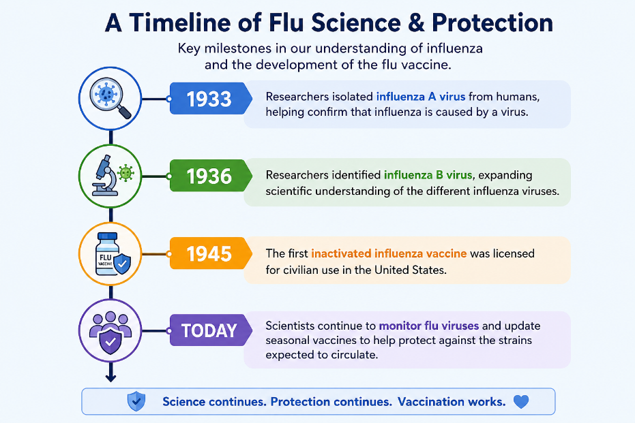
Why does the vaccine change? Flu viruses are constantly evolving, and protection from vaccination can decrease over time. That is why getting vaccinated each season matters.
Today's seasonal flu vaccines in the United States are generally trivalent, meaning they are designed to protect against three influenza virus components selected for the season.
Did you know? The flu vaccine has been recommended in the United States for more than 50 years. Even though scientists have learned a lot about influenza, getting vaccinated each year remains an important way to help protect yourself.
Make Your Flu Shot a Priority
Let's clear up a common misconception: The flu is more than just a bad cold.
Influenza is a contagious respiratory illness that can cause symptoms ranging from mild to severe. For some people, it can lead to complications such as pneumonia, hospitalization, or even death.

Getting your flu vaccine can help you:
Lower your risk of getting sick. Vaccination helps your immune system prepare to fight the flu.
Reduce the risk of severe illness. If you do get the flu, vaccination can help lower your risk of serious complications.
Protect your everyday routine. Taking steps to prevent illness may help reduce missed work, school, and other activities.
Help protect those around you. Vaccination is one part of reducing the spread and impact of flu in our community.
When should you get vaccinated? The CDC recommends getting your flu vaccine by the end of October when possible. However, vaccination can still be beneficial later in the season while flu viruses are circulating.
Keep in mind that it takes about two weeks after vaccination for protective antibodies to develop. Planning ahead can help you be prepared before flu activity increases.
Is the Flu Vaccine the Only One to Consider?
Not necessarily! Fall is a good time to review your vaccination history and find out whether you are due for any other recommended vaccines.
Depending on your age, health history, pregnancy status, and other factors, your healthcare provider may recommend vaccines that help protect against illnesses such as COVID-19 and respiratory syncytial virus (RSV).

Not sure what you need? No problem. Your healthcare provider can review your vaccination history and help you understand which vaccines are appropriate for you. In some situations, more than one vaccine can be given during the same visit.
A quick conversation with your healthcare provider can help you make a plan that fits your health needs.
Small Habits, Big Impact: Other Ways to Prevent Illness
Vaccination is an important part of staying healthy, but it is not the only step you can take. A few everyday habits can also help reduce the spread of respiratory illnesses.
Here are some simple reminders for the fall and winter months:
Wash your hands. Use soap and water regularly to help remove germs.
Give germs less room to spread. Avoid close contact with people who are sick when possible.
Stay home when you are sick. Rest and give yourself time to recover while helping protect others.
Cover your coughs and sneezes. Use a tissue or your elbow to help prevent germs from spreading.
Clean frequently touched surfaces. Remember items such as doorknobs, phones, and light switches.
Stay up to date on recommended vaccines. Check with your healthcare provider to see whether you need any seasonal vaccinations.
These habits may seem small, but putting them into practice can make a difference in protecting your health and the well-being of those around you.
Make Your Plan to Stay Healthy This Fall
As flu season approaches, take a few minutes to check whether you and your family are up to date on recommended vaccines. A little planning now can help you feel more prepared for the months ahead.

If you need a flu shot, have questions about seasonal vaccines, or are unsure which vaccines may be recommended for you, contact the Burke County Health Department to learn more about available services, eligibility, and scheduling.
Burke County Health Department
700 E. Parker Road, Morganton, NC 28655
Phone: 828-764-9150
Hours: Monday–Friday, 8 a.m.–5 p.m.
Protecting your health does not have to be complicated. Making a plan for recommended vaccinations, practicing healthy habits, and talking with your healthcare provider are all practical steps you can take this season.
Don't wait until flu is spreading throughout the community. Make your vaccination plan today!
Learn More
Want to learn more about the flu, flu vaccines, and ways to prevent illness? Explore these trusted resources from the Centers for Disease Control and Prevention (CDC):
Vaccine recommendations and health guidance can change. Talk with your healthcare provider or the Burke County Health Department for information based on your individual health needs.


Comments